Tourist class · Naturalist Cruise
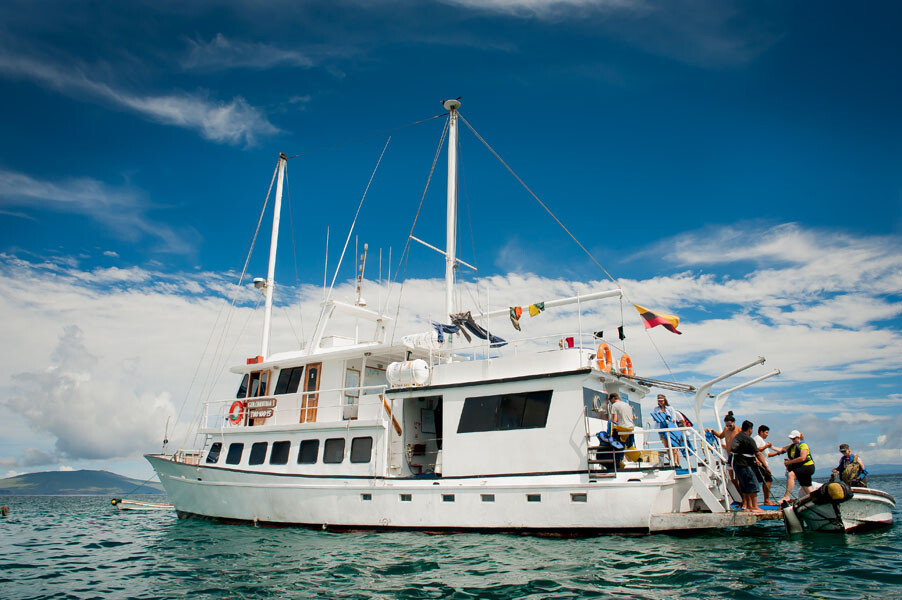
Golondrina
Affordable yacht with excellent 5- and 8-day itineraries, double cabins and bunk beds onboard.
- guests
- 16
- days on board
- 4–8
- from
- USD 3,300
- Guests
- 16
- Duration
- 4 to 8 days
- Length
- 22.22m
- Type
- Motor Yacht
Routes
Itineraries
Itinerary A 4 days / 3 nights
-
TUE
AM Baltra Island: Arrival to Galapagos, Welcome Ceremony, Briefing Session, Transfer to the boat
PM Santa Cruz Island: Primicias Ranch to see the Giant Tortoises and endemic bird species. Dinner and next-day briefing session.
-
WED
AM Isabela Island: Tintoreras Bay, Sea turtles, iguanas, sea lions, and sharks in the shallow fissures. Lunch onboard.
PM Isabela Island: Arnaldo Tupiza Tortoise Breeding Center, Wetlands walk, Playa del Amor Beach, La Playita Beach, and El Túnel del Estero. Dinner and next-day briefing session.
-
THU
AM Isabela Island: Rabida Island, Brown-Sanded Beach, hiking, birdwatching, and diving site. Lunch onboard.
PM Santa Cruz Island: Dragon Hill, visit to the saline lagoon, Galapagos Land Iguana nesting grounds. Dinner and next-day briefing session.
-
FRI
AM Santa Cruz Island: Black Turtle Cove, no landing but a dinghy tour to observe Black Sea Turtles, birds, and marine life.
PM Transfer to Baltra Airport by bus.
Itinerary B 5 days / 4 nights
-
FRI
AM Baltra Island: Arrival to Galapagos, Welcome Ceremony, Briefing Session, Transfer onboard the Golondrina.
PM Mosquera Island: Wet landing, exploration of the flat geography, white sand strip, rocks, tide pools. Great for diving and snorkeling. Dinner and next-day briefing session.
-
SAT
AM Isabela Island: Vicente Roca Point, dinghy ride, view of sea horses, penguins, rays, sea turtles, and more. Lunch onboard.
PM Fernandina Island: Espinoza Point, dry landing, hike through iguana nesting grounds, lava flows, penguins, lava cacti, and a colony of cormorants. Snorkeling before returning onboard.
-
SUN
AM Isabela Island: Urbina Bay, wet landing, 2-hour hike through coral reefs, seashells, land iguanas, giant tortoises, and non-flying cormorants. Snorkeling on the beach. Lunch onboard.
PM Tagus Cove, dry landing, visit the port area from the 1800s, hike through Palo Santo trees to Darwin Lake, panoramic views of Darwin and Wolf Volcanoes, snorkeling on the beach.
-
MON
AM Santiago Island: Port Egas, wet landing, hike to Salt Crater, see Darwin finches, marine iguanas, sea lions, and more. Snorkeling on the beach.
PM Chinese Hat, wet landing, hike through lava rock formations, see lava cacti and Galapagos Sesuvium. Snorkeling on the beach before returning onboard.
-
TUE
AM Santa Cruz Island: Visit the Charles Darwin Scientific Station, learn about the Giant Tortoises and the archipelago's formation.
PM Transfer to Baltra Island and flight back to the mainland.
Itinerary C 8 days / 7 nights
-
FRI
AM Baltra Island: Arrival to Galapagos, Welcome Ceremony, Briefing Session, Transfer to the boat.
PM Bachas Beach: Wet landing on the North coast of Santa Cruz. One of the main nesting grounds for sea turtles of the entire archipelago, perfect for swimming before heading back onboard. Dinner and next-day briefing session.
-
SAT
AM Genovesa Island: El Barranco, Dry landing with a 2-kilometer walk offering views of red-footed bobbies, swallow-tailed gulls, and other species. Lunch onboard.
PM Darwin Bay: An enormous bay home to colonies of frigates and marine life. Dinner and next-day briefing session.
-
SUN
AM Bartolome Island: Dry and Wet landings with a 375-step ladder leading to spectacular views of the bays and Pinnacle Rock.
PM Sullivan Bay (Santiago): Diving spot with white sand beaches and sea lions. Dinner and next-day briefing session.
-
MON
AM Plaza Sur Island: Dry landing, sea lion colonies, and various bird species. A 2½ km walk featuring the Sesuvium plant changing colors. Lunch onboard.
PM Santa Fe: Wet landing, snorkeling and swimming with sea lions. Trail through a forest of giant cacti and Palo Santo trees. Dinner and next-day briefing session.
-
TUE
AM San Cristobal Island: Kicker Rock, a volcanic formation frequented by marine life such as eagle rays, sea turtles, and sharks.
PM Witch’s Hill: An eroded hill of lava surrounded by coral reefs, home to salt-tolerant plants, bobbies, and rays. Lunch onboard.
PM Lobos Island: Master divers visit for a unique snorkeling experience. Dinner and next-day briefing session.
-
WED
AM Española Island: Punta Suarez, Dry landing, with blue-footed and masked bobbies, marine iguanas, and albatrosses. A 3 km trail to “El Soplador.”
PM Gardner Bay: Wet landing, nesting ground for Galapagos albatrosses. Excellent for snorkeling.
Gardner Islet: Snorkeling with small fish, sea urchins, and stars. Dinner and next-day briefing session.
-
THU
AM Floreana Island: Cormorant Point, Wet landing, lagoon home to flamingos, green-sanded beach for sea turtle nesting.
Devil’s Crown: No landing, a volcanic crater surrounded by coral reefs with vibrant underwater life.
PM Santa Cruz Island: Charles Darwin Station, learn about Giant Tortoises and the formation of the archipelago. Dinner and next-day briefing session.
-
FRI
AM Seymour Island: Wet landing, a gathering spot for blue-footed bobbies, frigates, marine iguanas, and sea lions. Transfer to Baltra Airport and flight back to mainland.
Itinerary D 8 days / 7 nights
-
FRI
AM Baltra Island – Mosquera Beach: Departing Guayaquil to Galapagos (1½ Hour Flight). BALTRA ISLAND: Home to Galapagos’ main airport, this will be the starting point of your experience aboard the best tour of the Galapagos Islands. A bilingual guide will meet you at the airport and assist you during the transfer onboard the Golondrina. Welcome Ceremony, briefing session.
PM After Lunch: MOSQUERA: Wet landing. Situated between Northern Seymour and Baltra, its distinctive flat geography sets her apart from the rest of islands. A long strip of white sand, rocks and tide pools, Mosquera Islet is an excellent diving and snorkeling site where you can enjoy the local fauna without crowds of tourists to distract you. Dinner and next-day briefing session.
-
SAT
AM Isabela Island – Fernandina Island: VICENTE ROCA POINT (ISABELA): Dinghy (panga) ride through this site made of two separate coves and a spectacular bay where sea horses, penguins, rays, sea turtles, globefish, blue footed Bobbies and the fascinating sunfish are commonly found. Lunch onboard.
PM ESPINOZA POINT (FERNANDINA): Dry landing. Hour and a half hike through sandy and/or rocky trail that’ll take you through iguana nesting grounds (nesting season January-June). During the hike you’ll be able to see lava flows, penguins, pelicans, lava cacti, and a colony of cormorants. Snorkeling on the beach before heading back onboard. Dinner and next-day briefing session.
-
SUN
AM Isabela Island: URBINA BAY (ISABELA): Wet landing on Urbina T. Kilometer-long, 2-hour-long hike through sandy and/or rocky trail where you can find coral reefs and seashells above water. You’ll also observe a large land iguana colony, Darwin finches, giant tortoises, (between June-September) and non-flying cormorants. Snorkeling on the beach before heading back onboard for lunch.
PM After lunch: TAGUS COVE (ISABELA): Dry landing. During the 1800’s this place was a port where whalers would dock and write the names of their vessels on the walls of a cave. The visit begins on the shore, up a wooden ladder and onto a trail that’ll take you through a forest of Palo Santo trees and arrive at Darwin Lake, a salt water lake inside an extinct volcanic crater. We’ll hike around the lake, through the site’s characteristically dry vegetation, so we can get a panoramic view of the Darwin and Wolf Volcanoes (2-hour-hike, begins at sea-level and getting up to 50m above sea-level). After the hike, a dinghy (panga) ride along the shoreline will offer a chance to observe penguins, cormorants, bobbies, pelicans and sally crabs. Snorkeling on the beach before heading back onboard. Dinner and next-day briefing session.
-
MON
AM Santiago Island: PORT EGAS: Wet landing on the dark sand beach of James Bay. 1½ hour hike on rocky terrain onto the Salt Crater where you can find Darwin finches, Galapagos hawks, marine iguanas, sally crabs, seals and sea lions. Snorkeling on the beach before heading back onboard.
PM After lunch: CHINESE HAT: Wet landing onto a rocky-terrain trail. 30-minute hike that’ll take you through lava rock formations, you’ll see the lava cacti and the Galapagos Sesuvium. Snorkeling on the beach before heading back onboard. Dinner and next-day briefing session.
-
TUE
AM Santa Cruz Island – Baltra Island: SANTA CRUZ ISLAND (CHARLES DARWIN SCIENTIFIC STATION): Visit the 1959-established Charles Darwin Station to learn about the Giant Tortoises and their reproduction, as well as the origin and formation of the archipelago.
PM PRIMICIAS RANCH: On the very first stop, you’ll be able to see the staple and namesake of the Islands: the Giant Tortoise, these gentle creatures are easily spotted gracing through the foliage or resting. Harder to spot but equally fascinating, the many birds that reside in the Galapagos are literal descendants of the Andean Plateau species; endemic sub-species of Mockingbirds, Flycatchers, Cattle Egrets and Finches can be seen throughout the Ranch. Dinner and next-day briefing session.
-
WED
AM Española Island: TINTORERAS: Located South of Port Villamil, Tintoreras has a tranquil turquoise-water bay where a variety of marine life can be seen: sea turtles, iguanas, and sea lions are almost a guaranteed spot. The bay is connected to a shallow fissure, when the tide is low the entrance is cut off and sharks and stingrays can be found swimming within. Lunch onboard.
PM ARNALDO TUPIZA BREEDING CENTER: The population of giant tortoises of the island is maintained through their bred-in-captivity program. WETLANDS: This area is known for its sandy beaches, rocky coastline and its mangroves. A series of trails allow tourists to closely observe the four species of mangrove that can be found in the Galapagos, as well as Great Blue Herons, Galapagos Hawks, Lava Herons, Striated Herons, Lava Gulls and many other bird species. 30-minute hike. PLAYA DEL AMOR: On this beautiful beach you can see marine iguanas resting or diving in the crystal-clear waters, and iconic Galapagos’ birds such as the blue-footed boobies, the masked boobies and frigatebirds. LA PLAYITA: It is a beach of fine sand, you can see pelicans, marine iguanas, boobies fishing, as well as a mangrove and a cactus forest. EL TÚNEL DEL ESTERO: It is directly connected to the ocean; it is surrounded by cacti that make it an unparalleled landscape. While passing through it, you can see small crabs and a variety of small fish. Dinner and next-day briefing session.
-
THU
AM Santa Cruz Island: RABIDA ISLAND: One of the more colorful and volcanically active islands of the archipelago, as well as an amazing diving site. We begin at the prominent Brown-Sanded Beach of Rabida, then a light ½ a mile hike to reach a lookout of breath-taking view. A paradise for birdwatchers, Flycatchers, Brown Pelicans, Galapagos Hawks, varieties of Finches and many other of the rarer species flock to Rabida. Wet landing, lunch onboard.
PM DRAGON HILL: After docking, we’ll go behind the beach to reach a hyper-saline lagoon frequented by Flamingos, Wilson’s plovers, Black-bellied Ducks among others. The hike to Dragon Hill overviews the bay and takes you right into the Galapagos Land Iguana nesting grounds after which the site takes its name. Many of the iguanas nesting at Dragon Hill have been relocated here by the Charles Darwin Scientific Station. Dinner and next-day briefing session.
-
FRI
AM Santa Cruz Island – Baltra Airport: BLACK TURTLE COVE: No landing, dinghy (panga) tour of the site; near Baltra. An extraordinarily beautiful experience. You’ll get a chance to see Black Sea Turtles in the clear water below, as the dinghy cuts the engine and the operators row you along the mangrove-laden shoreline, discover hidden lagoons while keeping an eye out for the diverse bird and sea life variety. After visiting the cove, you’ll do your final transfer to Baltra Airport by bus and fly back to mainland.
Itinerary E 5 days / 4 nights
-
MON
AM Departing Guayaquil to Galapagos (1½ Hour Flight).
BALTRA ISLAND: Home to Galapagos’ main airport, this will be the starting point of your experience aboard the best tour of the Galapagos Islands. A bilingual guide will meet you at the airport and assist you during the transfer onboard the Golondrina. Welcome Ceremony, briefing session.PM – After Lunch
TORTUGA BAY BEACH: After a 1½ Hour walk through the most inhabited island in Galapagos you’ll arrive at the white sands and turquoise waters of Tortuga Bay. One of the most beautiful beaches of the Galapagos, Tortuga Bay has actually two beaches to offer: a wave-pounding surf that’s frequented by local and international surfers; and a second beach where the ocean is calm and there are virtually no waves. After the visit at the beach you can enjoy the night life Tortuga Bay has to offer. Accommodation and dinner at Hotel Fernandina or similar. Dinner and next-day briefing session.
-
TUE
AM After Breakfast
SANTA CRUZ ISLAND (CHARLES DARWIN SCIENTIFIC STATION): Visit the 1959-established Charles Darwin Station to learn about the Giant Tortoises and their reproduction, as well as the origin and formation of the archipelago.PM – After Lunch
PRIMICIAS RANCH: On the very first stop, you’ll be able to see the staple and namesake of the Islands: the Giant Tortoise, these gentle creatures are easily spotted gracing through the foliage or resting. Harder to spot but equally fascinating, the many birds that reside in the Galapagos are literal descendants of the Andean Plateau species; endemic sub-species of Mockingbirds, Flycatchers, Cattle Egrets and Finches can be seen throughout the Ranch. Dinner and next-day briefing session.
-
WED
AM After Breakfast
TINTORERAS: Located South of Port Villamil, Tintoreras has a tranquil turquoise-water bay where a variety of marine life can be seen: sea turtles, iguanas, and sea lions are almost a guaranteed spot. The bay is connected to a shallow fissure, when the tide is low the entrance is cut off and sharks and stingrays can be found swimming within. Lunch onboard.PM – ARNALDO TUPIZA BREEDING CENTER: The population of giant tortoises of the island is maintained through their bred-in-captivity program.
WETLANDS: This area is known for its sandy beaches, rocky coastline and its mangroves. A series of trails allow tourists to closely observe the four species of mangrove that can be found in the Galapagos, as well as Great Blue Herons, Galapagos Hawks, Lava Herons, Striated Herons, Lava Gulls and many other bird species. 30 minute hike.
PLAYA DEL AMOR: On this beautiful beach you can see marine iguanas resting or diving in the crystal-clear waters, and iconic Galapagos’ birds such as the blue-footed boobies, the masked boobies and frigatebirds.
LA PLAYITA: It is a beach of fine sand, you can see pelicans, marine iguanas, boobies fishing, as well as a mangrove and a cactus forest.
EL TÚNEL DEL ESTERO: It is directly connected to the ocean; it is surrounded by cacti that make it an unparalleled landscape. While passing through it, you can see small crabs and a variety of small fish.
Tourist Attraction: Sunrise Point of Riverview
Best Buy of this Place: Handmade Wooden Accessories
Food Speciality: Sushie
Activity: Two Hours Boating Ride
Dinner and next-day briefing session.
-
THU
AM After Breakfast
RABIDA ISLAND: One of the more colorful and volcanically active islands of the archipelago, as well as an amazing diving site. We begin at the prominent Brown-Sanded Beach of Rabida, then a light ½ a mile hike to reach a lookout of breath-taking view. A paradise for birdwatchers, Flycatchers, Brown Pelicans, Galapagos Hawks, varieties of Finches and many other of the rarer species flock to Rabida. Wet landing, lunch onboard.PM – DRAGON HILL: After docking, we’ll go behind the beach to reach a hyper-saline lagoon frequented by Flamingos, Wilson’s polvers, Black-bellied Ducks among others. The hike to Dragon Hill overviews the bay and takes you right into the Galapagos Land Iguana nesting grounds after which the site takes its name. Many of the iguanas nesting at Dragon Hill have been relocated here by the Charles Darwin Scientific Station. Dinner and next-day briefing session.
-
FRI
AM After Breakfast
BLACK TURTLE COVE: No landing, dinghy (panga) tour of the site; near Baltra. An extraordinary beautiful experience. You’ll get a chance to see Black Sea Turtles in the clear water below, as the dinghy cuts the engine and the operators row you along the mangrove-laden shoreline, discover hidden lagoons while keeping an eye out for the diverse bird and sea life variety.After the cove, you’ll do your final transfer to Baltra Airport by bus.
Your cruise
What's included
Included
- Accommodation in double cabin (8 cabins with bunkbeds)
- Transfer in Galapagos
- All meals and activities throughout the cruise
- Bilingual National Park Guide
- Water, coffee, and tea
Not included
- Galapagos National Park entrance fee
- Transit Control Card
- Soft and Alcoholic beverages consumed onboard
- Gratuities
- Wetsuit
- Snorkel Equipment
- Personal expenses
- Airfare to and from Galapagos
Good to know
- Single supplement: 80%
- Supplement for special itinerary : 10%
- Children: 10% discount for children under 5 years old
- Christmas and New Year charge (query for more information)
On board
Specifications
- Beam
- 5.09m
- Generators
- 2 KOHLER 13 KW, 10 KW
- Speed
- 8 knots
- Navigation Equipment
- Radar, magnetic compass, GPS, VHF radio, SSB satellite radio, EPIRB, speed and distance meter, compasses, barometer, clock.
- Safety Equipment
- EPIRB (Emergency Position Indicating Radio Beacon), 2 inflatable boats, life jackets, emergency signals, complete fire control system, desalination plant.
FAQ
Questions
What amenities are available in the cabins on Golondrina?
All cabins on the Golondrina yacht are comfortable and feature private bathrooms with a toilet, hot water shower, sink, and vanity. The cabins are air-conditioned for added comfort.
What social areas are offered on board the Golondrina?
The Golondrina provides a spacious dining room, living room, bar with TV and DVD, sound system, and a solarium, creating a relaxing environment for passengers to enjoy during their trip.
Does the Golondrina yacht provide snorkeling equipment?
Yes, the Golondrina is equipped with complete snorkeling gear and wetsuits, which are available for rent, allowing guests to explore the beautiful marine life of the Galápagos.
How many cabins are on the Golondrina yacht?
The Golondrina yacht offers 8 double cabins, each providing comfortable and private accommodations for guests during their stay.
What is the experience of the crew on board the Golondrina?
The crew of the Golondrina has more than 20 years of experience. The team consists of 8 members, including a highly qualified captain, a bilingual naturalist guide, a chef, an assistant chef, a bartender, a mechanic, and two sailors, all dedicated to ensuring a safe, professional, and comfortable experience for guests.
More yachts
You may also like
 −33%
Special offer
Tourist
24
Dive Boats
Danubio Azul
budget liveabaord galapagos
- 14 guests
- 8 days
From USD 4,500
USD 3,000
Save USD 1,500
 −14%
Special offer
Tourist
12
 Luxury
41